Hiring vehicles and drivers in the UK
How Chauffeur Hire Works in the UK
7 November 2026
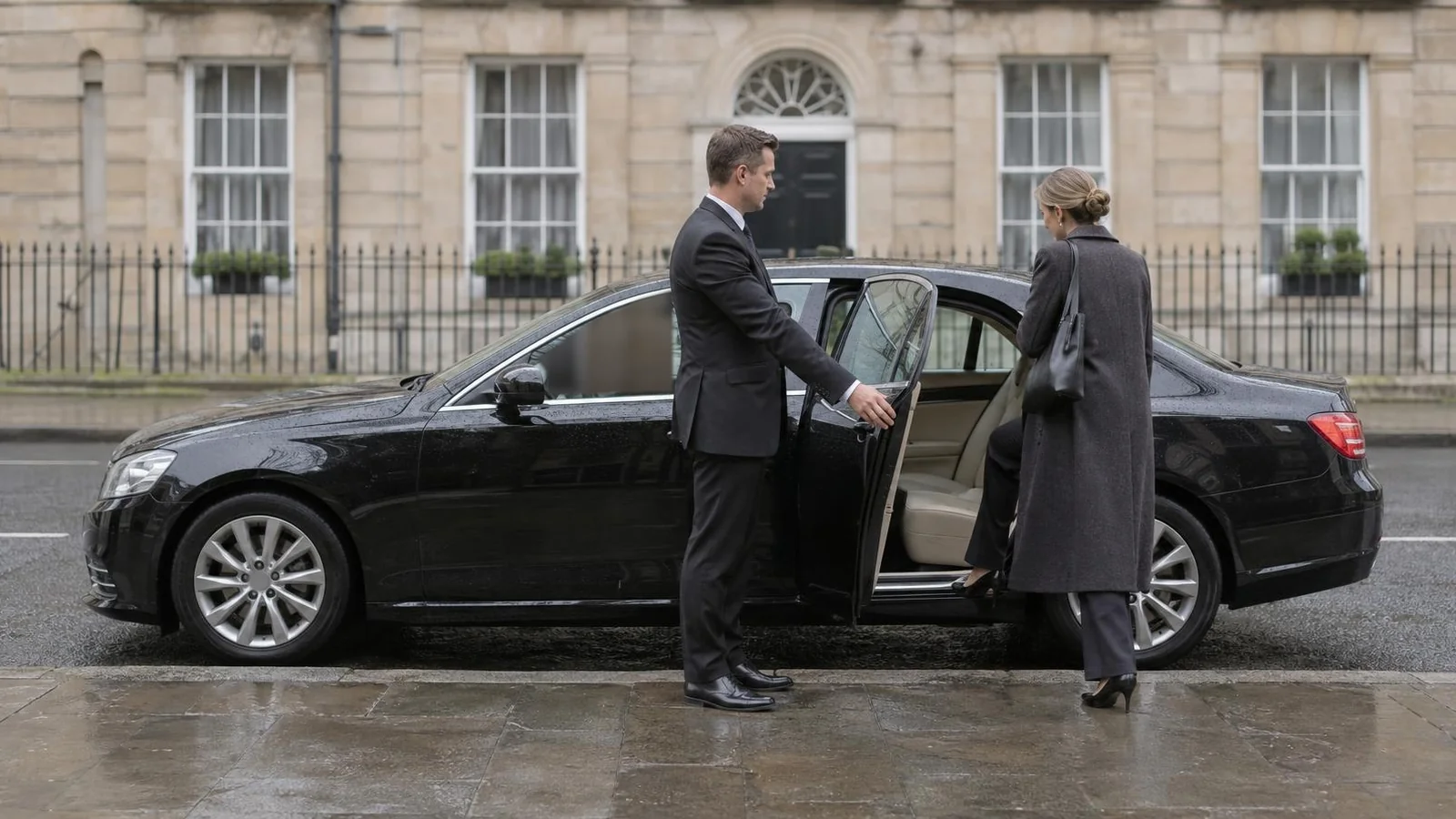
How chauffeur hire works in the UK is simple: you book a licensed driver and an executive car in advance, agree the price and the details in writing, and the driver takes you door to door. Chauffeur firms are normally licensed as private hire operators, so the same checks apply whether you’re in London, Manchester, Birmingham, Edinburgh or Bristol, and knowing them helps you book with confidence.
Quick answer: Chauffeur hire in the UK means pre-booking a licensed private hire driver and an executive vehicle. You choose the car, agree the service and the price in advance, and your chauffeur provides door-to-door travel. Unlike a taxi, it can’t be hailed in the street.
Key Takeaways
Chauffeur hire is a pre-booked service, and in law it is normally a form of private hire.
The process is simple: choose a licensed firm, pick your vehicle, and get a clear written price.
Costs depend on the vehicle, the time booked, the distance, the location and any extras.
Driver, vehicle and operator should all be licensed by the same local authority, or by Transport for London in the capital.
Get the price, the vehicle and the cancellation terms in writing before you pay a deposit.
How Chauffeur Hire Works in the UK: Step by Step
Chauffeur services are always pre-booked and arranged around your plans, whether that’s a business meeting in London, a special event in Manchester or a trip to the airport in Birmingham.
1. Research and Select a Chauffeur Company
Look for firms with good reviews, clear contact details, transparent pricing and a licence you can verify. Ask which authority licenses them, such as Transport for London or Manchester City Council. If the trip is a flight connection, our guide on how to book an airport transfer covers the extra questions to ask.
2. Request a Quote and Choose Your Vehicle
Most firms give quotes online or by phone. You’ll need to give your pick-up and drop-off points, your timings and any extras, such as additional stops or luggage. Firms typically offer executive saloons, luxury SUVs and people carriers for groups, so ask exactly which model you’re being quoted for.
3. Confirm Your Booking and Service Details
Once you’re happy with the quote, confirm your booking with your itinerary and any preferences. You should receive written confirmation of the price, what’s included, the driver’s contact details and the cancellation policy. Check the terms carefully, because surprise charges usually come from extras that were never put in writing.
4. The Day of Your Journey
Your chauffeur should arrive ahead of the agreed time, ready to help with luggage. Expect a clean, well-presented vehicle and a discreet service, whether you’re heading to a business meeting, a wedding or an airport. Check that the driver and the car match your confirmation before you set off.
5. Aftercare and Feedback
Good firms ask for feedback and deal with queries quickly. If something goes wrong, raise it with the firm first and keep your confirmation and receipt.
Chauffeur Hire vs Taxi Services: What’s the Difference in the UK?
Chauffeur hire is a type of private hire, so it follows different rules from a taxi. Our guide to private hire and taxi rules explains the legal side in full. In practice, the differences look like this:
Aspect | Chauffeur Hire | Taxi |
|---|---|---|
Booking | Pre-booked through a licensed operator | Hailed, taken from a rank, or booked |
Vehicle Type | Executive or luxury car | Standard taxi, varies by area |
Driver Standards | Licensed private hire driver, often with the firm’s own uniform and training | Licensed taxi driver, with equivalent background checks |
Pricing | Quoted in advance, usually higher | Usually metered, up to a maximum set by the licensing authority |
Service Extras | Agreed in advance, and may include refreshments or Wi-Fi | Usually a basic service |
Chauffeur hire suits executive travel, weddings and events where comfort and discretion matter. A taxi is usually the simpler choice for a quick local journey.
Chauffeur Hire Regulations and Service Standards
The Department for Transport says private hire vehicles include executive cars, chauffeur services and limousines. In practice, a chauffeur firm using cars with up to eight passenger seats needs the same licences as a minicab firm. GOV.UK says the driver, vehicle and operator must all be licensed by the same authority, which is the local council or Transport for London. Being called a chauffeur doesn’t prove a firm’s status, so ask to see its licence details.
Licensing and Background Checks
The Department for Transport’s statutory taxi and private hire standards (GOV.UK) tell licensing authorities in England to carry out enhanced DBS and barred list checks on drivers, and to repeat them every six months. Its best practice guidance also says authorities should apply the Group 2 medical standard. Taxis, and private hire vehicles that are at least three years old, must have an MOT or equivalent at least once a year.
Exceptions to Know About
Firms that supply cars solely for weddings or funerals can be exempt from private hire licensing, so don’t assume a wedding car carries a plate. Some councils also let executive vehicles go without one on display. Vehicles with nine or more passenger seats fall under public service vehicle rules instead. In each case, ask the firm to explain its licensing and insurance before you pay.
What to Expect from a Chauffeur Service
Expect punctuality and a smartly dressed driver. Extras such as mobile charging, Wi-Fi and refreshments vary by firm, so check what’s included. Many firms monitor flight arrivals and offer meet-and-greet at airports.
Transparency and Consumer Rights
Since April 2025, the Digital Markets, Competition and Consumers Act 2024 has banned drip pricing, which means hiding unavoidable charges until late in a purchase. A good firm will put its terms in writing. If a problem isn’t resolved, you can report licensing concerns to the authority that issued the licence, and the Citizens Advice consumer service can pass complaints to Trading Standards.
Understanding the Cost of Hiring a Chauffeur in the UK
There is no standard chauffeur rate. Firms set their own prices, usually by the hour, by the day or as a fixed price for a route, and they can differ widely, so compare written quotes for your own journey.
What Influences Chauffeur Hire Pricing?
Vehicle type: luxury saloons and SUVs cost more than standard executive cars.
Journey distance and duration: longer trips or multi-stop itineraries increase the price.
Extras: child seats, additional pickups and short-notice bookings may cost more.
Location: ask whether parking, tolls and airport charges are added to the quote.
Time of day: late-night or early-morning journeys sometimes carry a premium.
What’s Included, and What’s Not?
Ask whether the price covers the driver’s time, fuel, parking, tolls, waiting time and any out-of-area mileage. Good firms will give you a written breakdown before you confirm.
How to Save Money on Chauffeur Hire
Book early and ask about off-peak times. Some firms offer better terms for return journeys, regular business clients, longer bookings or multiple vehicles, so it’s worth asking. If you’re moving goods and don’t need a driver, see what to bring when you hire a van instead.
Chauffeur Booking Tips and Avoiding Common Issues
Booking a chauffeur doesn’t need to be daunting. A few checks prevent most problems.
Top Chauffeur Booking Tips
Plan ahead, as popular dates and major events can book up quickly.
Ask for written confirmation, with a breakdown of costs and what’s included.
Request your chauffeur’s name, the vehicle make and the registration before your journey.
Check that the driver, vehicle and operator are licensed by the same authority.
Save the firm’s contact details for changes or emergencies.
Common Issues with Chauffeur Hire and How to Avoid Them
Unclear pricing: ask for an all-inclusive quote and check for extras before paying a deposit.
Last-minute vehicle swaps: specify your preferred car and ask for written confirmation.
Poor communication: read reviews and choose firms that reply promptly and clearly.
No-shows or late arrivals: confirm the details with the firm the day before.
No proof of licensing: ask for the firm’s licence details and check them with the authority.
If you have a question, get in touch with our team.
There is more advice on our blog.
Frequently Asked Questions
How do I know if a chauffeur company is legitimate?
Ask which authority licenses it and for its licence number. In London you can use the TfL licence checker. Elsewhere, ask the council’s licensing team.
What’s the difference between executive car hire and standard chauffeur services?
Both terms are used loosely. "Executive car hire" with a driver usually points to high-end vehicles, while "chauffeur" describes the driver-led service. Check the actual vehicle and service you’re being quoted for.
Can I book a chauffeur at short notice?
Some firms take same-day bookings, but your choice may be limited. For special events or peak times, book as early as you can.
Are gratuities included in the chauffeur price?
Firms differ, so ask when you book. Tipping is your choice, and there is no set rule.
What should I do if my chauffeur is late or does not arrive?
Contact the firm immediately using the details in your confirmation. If it isn’t resolved, make a formal complaint to the firm, and contact the Citizens Advice consumer service for advice on your rights.
Before you book, work through our hire checklist for cars, vans and drivers, which covers the licence checks and what to get in writing.